Thirty-Six Shots and No Do-Overs: The Disposable Camera Revival Taking Over UK Dancefloors
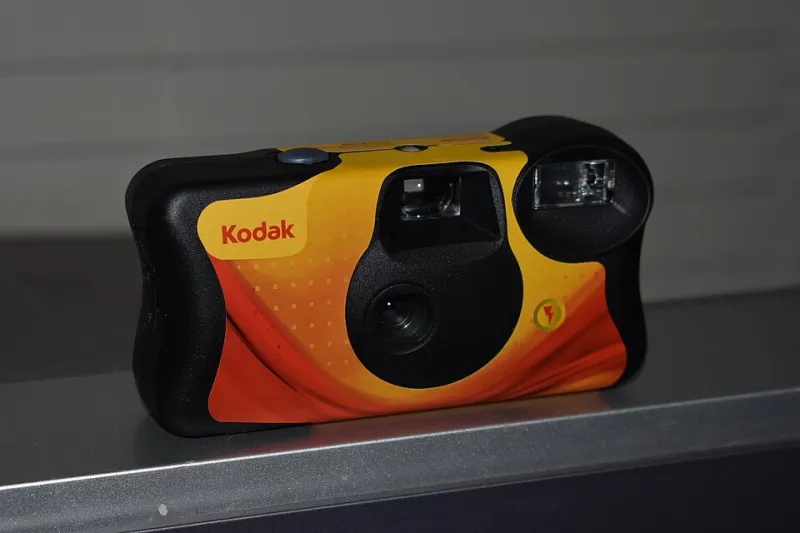
Photo: Matthew Paul Argall from Australia, CC BY 2.0, via Wikimedia Commons
There is a moment on every big night out when someone produces a tiny plastic camera, squints at it like it has personally insulted them, and asks the group to squeeze in. Nobody knows if the shot will work. Nobody can check it. Nobody can delete it. That, it turns out, is the entire point.
In 2026, the disposable camera is having a proper renaissance in UK clubs. Not as a novelty prop for a themed birthday, but as a deliberate choice for people who are a bit tired of experiencing a night out through a five-inch screen. The camera roll has become a second dancefloor: curated, filtered, posted before the taxi home. The disposable camera offers the opposite. Thirty-six shots, one flash, no preview, and a week-long wait to find out whether you actually captured anything worth keeping.
The phone got too good at being a camera
Modern phones are miraculous and exhausting. They can shoot crystal-clear footage in near darkness, stabilise a shaky dancefloor video and offer you twelve slightly different versions of your own face before you have even found the bar. For a certain kind of clubber, that is precisely the problem.
A disposable camera removes the decision fatigue. You cannot zoom. You cannot check. You cannot spend fifteen minutes adjusting the exposure while your mates age visibly beside you. You point, you flash, you move on. The limitation is the appeal. It turns taking photos into something closer to a party trick than a production process.
It also changes the social dynamic. A phone camera pointed at a group can feel like a broadcast. A disposable camera feels like a shared secret. People lean in. People pose badly on purpose. Someone always insists on taking a photo of the DJ booth and someone else always tries to photograph the ceiling. Half the roll will be unusable. The other half will be weirdly perfect.
A camera you can lose, and a night you cannot re-shoot
Part of the disposable camera's charm is that it is cheap enough to treat as part of the night rather than a piece of tech to protect. It can live in a coat pocket, get a bit sweaty, survive a cloakroom scrum and still come out shooting. If it goes missing, it is annoying rather than catastrophic.
That low stakes feeling feeds into the bigger appeal: the inability to re-shoot. You get one go. If your mate blinks, they blink. If the flash catches the mirror ball at exactly the wrong angle, you get a white rectangle and a memory. There is no retake, no filter and no chance to curate the moment into something it was not.
For clubbers who have spent years watching their own nights out through a screen, that feels oddly liberating. The camera becomes a reason to look up, not down. You take the shot, then you put the camera away and get back to the business of being there.
The morning-after development run
The delayed gratification is the real ritual. In a world where everything is immediate, waiting for a disposable camera to be developed has become a strange little event. The night ends. The camera sits in a bag. A few days later, you remember it exists and spend the journey to the photo shop wondering what on earth is on it.
In the UK, that usually means a high-street lab, an independent photo shop or a mail-order service. Boots, Max Spielmann and Snappy Snaps are the obvious names, but plenty of independent labs still process 35mm film and can offer advice on turnaround times. Prices vary, so it is worth ringing ahead or checking online before you turn up with a camera bag and a hopeful expression.
Then comes the reveal. The envelope opens. There are six photos of the same group of people pulling the same face. There is one beautifully blurry shot of a dancefloor that looks like an abstract painting. There is a photo of someone's hand. There is a photo you have absolutely no memory of taking. It is chaotic, imperfect and much more fun than scrolling through a camera roll of near-identical images.
How to shoot a dark room without wasting the roll
Disposable cameras are simple, but they are not magic. A dark club is a difficult place to take photos, even for a proper camera. A few practical rules will save you from a roll of murky nothingness.
First, choose the right film for the job. Most disposable cameras come loaded with colour negative film, often around ISO 400 or 800. For dark venues, an 800-speed camera is a sensible starting point. Higher-speed film is more sensitive to light and gives you a better chance in dim rooms. If you are buying a reusable point-and-shoot instead, look for a model with a built-in flash and load it with 800 or 1600 ISO film.
Second, use the flash. Almost every time. A disposable camera without flash in a dark club is basically a small plastic brick with optimistic branding. The flash is what gives these photos their signature look: harsh, bright, slightly chaotic, with everyone squinting into the lens like they have just been caught doing something they should not be doing.
Third, get close enough. Disposable flashes are not powerful. If you are trying to photograph someone from across the room, you will probably get a dark shape and a lot of atmosphere. Stay within a few metres of your subject and let the flash do its work.
Fourth, look through the viewfinder. It sounds obvious, but after a few drinks it is easy to forget. The viewfinder is your only guide. There is no screen to tell you that you have accidentally photographed your own finger.
Finally, keep the camera dry and out of direct heat. Do not leave it in a hot car or on a radiator. Develop it reasonably promptly once the night is over. Film does not need to be treated like a museum artefact, but it does prefer not to be cooked.
Flash etiquette for the modern dancefloor
The disposable camera revival comes with a bit of responsibility. A flash in a dark room is bright. Ask before you photograph strangers. Avoid toilets, changing areas and any situation where someone is not in a position to say yes. Respect phone-free policies if the night has one. And if someone waves you away, put the camera down and move on. The whole point is that this is meant to be fun for everyone in the frame, not just the person holding the plastic box.
Why the grainy shot wins
The disposable camera is not a better camera. It is a better excuse. It gives you a reason to take one photo and then stop. It turns the group into a little team, huddled together waiting for a flash that may or may not blind everyone. It makes the night feel finite and precious, like something worth capturing badly rather than performing perfectly.
In 2026, UK clubbers have plenty of ways to document a big night out. The disposable camera is the one that reminds you to actually have one first. Thirty-six shots, no do-overs, and a week of wondering what the hell happened. That is a fair trade for a proper night out.