One More Song: How UK Clubs Pick the Tune That Sends You Home
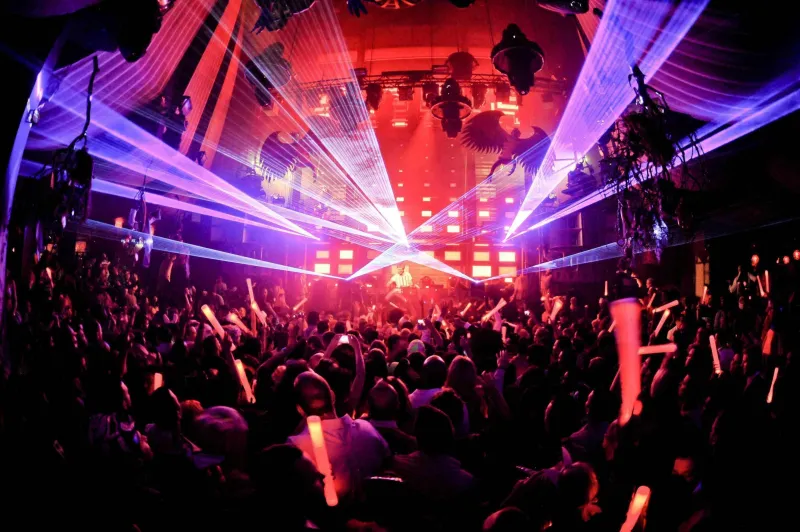
Photo: nightclub crowd arms raised singing together under lights at end of night, via wallpaperaccess.com
At 3:57am on a Saturday, the bar staff are stacking pint glasses and the cloakroom queue has already doubled. The DJ has one record left. In some rooms it is a formality; in others it is the most scrutinised four minutes of the night. The closing track is the last thing a crowd hears, the first thing they hum on the walk to the taxi rank, and — whether promoters admit it or not — a piece of the venue's identity.
This is not a list of the best songs ever made. It is a look at how UK clubs choose the tune that sends you home, why some closers work and others curdle, and why the humble last record has become a minor obsession for DJs, door staff and the people who book them.
The Peak-End Rule, With A Sticky Floor
Behavioural scientists have a phrase for this: the peak-end rule. People do not remember an experience as an average of every moment; they remember the high point and the ending. A six-hour set with a flawless middle and a shrug of a finale will be filed away as 'good, but the end was weird'. Swap in a song the room can yell back and the memory sharpens into something warmer.
A promoter who runs a 400-capacity room in Leeds puts it bluntly: 'You can do everything right for five hours and still get judged on the last tune. It is the only part of the night everyone experiences at the same time, in the same mood, facing the same way.' Door supervisors have a more practical relationship with the closer. 'Give them a singalong and they drift out happy,' says a supervisor at a large Manchester venue. 'Give them a sudden stop and you get 300 people standing on the pavement arguing about where to go next.'
The Big Singalong Is Not Going Anywhere
The default setting for the UK's big-room closer remains the communal anthem. The Killers' 'Mr Brightside' has been the undisputed champion for years — a song released in 2004 that somehow became the national end-of-night hymn through sheer repetition and the fact that everyone, from 18 to 58, knows the 'she's touching his chest' bit. It is followed closely by Oasis's 'Don't Look Back in Anger', which carries extra weight in Manchester and a strange, post-2017 solemnity everywhere else; 'Sweet Caroline', which splits rooms between joy and football-induced dread; and Robbie Williams's 'Angels', still the go-to for a certain kind of emotional close.
None of these are adventurous choices. That is the point. A singalong closer transfers the emotional labour from the DJ to the crowd. The booth becomes a conductor's podium; the dancefloor becomes a choir; the lights come up on a room of strangers who have, for three minutes, agreed on something. It is cheap magic, and it works.
The downside is fatigue. 'The third time you hear Mr Brightside in a month it stops being a moment and starts being a fire drill,' says a London DJ who plays across club and corporate bookings. Some venues have quietly retired it. Others keep it for Saturdays only. A few use it as a reward: the crowd has to earn it by staying to the end.
Two Schools: The Fade And The Hammer
Not everyone wants a singalong. The alternative is the ambient fade — a last record that lowers the heart rate and softens the exit. Bicep's 'Glue' is the modern standard, all shimmer and melancholy; Rüfüs Du Sol's 'Innerbloom' does similar work over nine minutes; Massive Attack's 'Unfinished Sympathy' can turn a hard night into something cinematic. The logic is practical: a calm closer means fewer fights, easier conversations, and a crowd that leaves in dribs rather than a surge.
Then there is the hammer. Some rooms end at 160bpm and above, with no apology, sending everyone out wired and shouting. It is a statement — we are not here to tuck you in — but it is harder work for door staff and it strands the crowd at peak energy on a pavement with nowhere to put it. A Bristol promoter describes it as 'a young person's game. Great for a 500-cap warehouse, terrible for a 1,000-cap venue with a residential neighbour and one taxi rank.'
A Regional Shortlist, By Vibe Rather Than Science
Glasgow and Scotland: The Proclaimers' '500 Miles' is the nuclear option — a song so unifying it borders on a national anthem. Sub Club loyalists will argue for something houseier: CeCe Peniston's 'Finally' or a stretched-out edit of 'You Got the Love'.
Manchester: Oasis and The Stone Roses rule. 'I Am the Resurrection' is ideal for a long, slow lights-up; 'Don't Look Back in Anger' is the crowd-pleaser. There is a reason the city's clubs have never fully let go of either.
Leeds: Primal Scream's 'Loaded' and M People's 'Moving On Up' do the job in rooms that lean baggy and soulful. 'Mr Brightside' is still the fallback.
London: Less singalong, more euphoria. 'Finally', 'Lola's Theme', 'Lady (Hear Me Tonight)' — the classic house closers that let a crowd leave on a high without turning into a wedding reception.
Bristol: 'Glue' is almost a civic tradition. For a heavier night, 'Unfinished Sympathy' resets the room before the lights.
Belfast: The Undertones' 'Teenage Kicks' — short, sharp, joyful, and impossible to overplay in the city that gave it to the world.
Cardiff: Tom Jones's 'Delilah' is a singalong with a dark heart and a football terrace attached. Use with care.
What Promoters Actually Factor In
The closing track is not chosen in a vacuum. Licensing and curfew come first: most UK clubs are working to a 2am, 3am or 4am finish, and the last record has to land before the lights and the licensing clock do. Then there is transport. The last train is a myth for most clubbers — it leaves before the night ends — so the closer has to work with night buses, night tubes on Friday and Saturday in London, and the surge-priced taxi that everyone is pretending not to think about.
Staffing matters too. A singalong gives door staff a natural dispersal cue. An ambient fade gives them time. A hard stop gives them a crowd with nowhere to go. 'The last tune is the first thing we judge a promoter on,' says a venue manager in Birmingham. 'If they get it wrong, we are the ones on the pavement at 4am.'
And then there is brand. Some clubs are known for their closer the way restaurants are known for a signature dessert. It becomes a ritual, a photo opportunity, a reason to stay. Others guard it like a secret.
The Case Against The Anthem
There is a growing argument that the closing anthem has become too predictable — that it turns the end of a night into karaoke, and tells the crowd what to feel rather than letting them feel it. 'I would rather leave them curious than singing,' one DJ says. 'End on something nobody knows and you send the die-hards home with a hunt on their hands. That is a better gift than a chorus.'
It is a fair point. But it is also a minority sport. For most big nights out, the closer is not the place for a curveball.
So Does It Make Or Break A Night?
It can break one. A flat finish can sour an otherwise good night, and a badly judged anthem can make a room feel like a hen do. But it rarely makes a night on its own. The middle six hours still do the heavy lifting: the sound, the crowd, the door, the bar, the strange alchemy that makes a Tuesday feel like a Saturday. The closer is the exclamation mark, not the sentence.
Still, it is the cheapest bit of magic available. You can spend thousands on the rig, the lights and the booking fee. The last four minutes cost nothing but taste. Get them right, and a crowd walks out singing. Get them wrong, and they walk out scrolling for somewhere else.
At 4:01am, the lights come up. The right record makes the pavement feel like an encore. The wrong one makes it feel like a fire drill.