Sun's Out, Rig's Out: The UK Daytime Raves Rewriting the Big Night Out in 2026
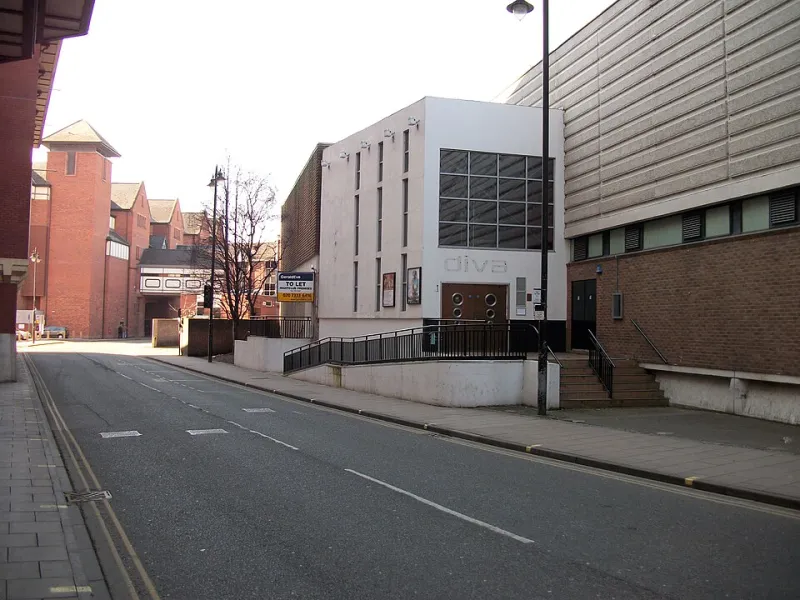
Photo: Photograph: Anna Fox, CC BY 2.0, via Wikimedia Commons
The traditional British big night out runs on a fixed schedule. Pre-drinks at eight, queue at eleven, dancefloor at one, taxi at four, regret at noon. It is a good schedule. It is also, for a very long time, the only one most of us were ever offered.
Except, increasingly, it isn't. Over the last few summers a second timetable has quietly taken hold — one where the doors open while the sun is still up, the peak lands somewhere around teatime, and you're back on the sofa with a takeaway before the ten o'clock news. Daylight raving has stopped being the polite warm-up for the real night out. In 2026, for a lot of people, it is the night out.
From novelty to proper fixture
Cast your mind back a few years and a daytime party was a curiosity — a festival side-stage, a bank holiday one-off, something you did because the licence said so rather than because you wanted to. That changed fast. Day Fever, the daytime disco that started in 2023, proved there was an audience of people who wanted to be dancing at 3pm and in bed by 11pm, and that audience turned out to be enormous. Daytimers, the South Asian-led daytime party series that began in 2021, showed that a dancefloor in daylight could be sober-friendly, family-adjacent and still absolutely furious when it needed to be.
Add in the economics and you can see why promoters kept pushing. A late licence is expensive. A 4am taxi is expensive. A night out that starts at eleven and finishes at dawn eats an entire weekend, and a lot of us have fewer weekends to spare than we used to. Daylight clubbing trims the overheads on both sides of the bar.
The park-side blockbusters
If you want the full-scale version — big rigs, big names, grass underfoot — the London park circuit is still the benchmark. Gala on Peckham Rye, the Brockwell Park double act of Mighty Hoopla and Cross the Tracks, and Field Day all run on daylight hours with curfews that land around half ten. You get a headline set in something approaching golden hour, which is a genuinely different experience to hearing the same track at 3am in a blacked-out room.
Outside the capital, We Out Here in Cambridgeshire and Timber in the National Forest both lean heavily on the daytime — workshops, talks, brass bands and long, loose afternoons before anything gets serious. These are the events to book early. Park-side capacity is finite, local authorities are twitchy about noise, and the good ones sell out months in advance rather than weeks. If a 2026 date is already announced, treat it as urgent.
The warehouse afternooners
The other end of the scale is the afternooner: a club room, a courtyard, a decent canopy and a rig turned up to a level the neighbours can live with. Bristol does this better than anywhere — Motion's outdoor yard was built for daylight — and Manchester, Leeds and Sheffield all have spaces that come into their own between two and eight. Watch the Sunday sessions at the country's 24-hour venues too, where the last stretch of a marathon sometimes turns into the sunniest, silliest part of the weekend.
These are usually cheaper, usually walk-up friendly, and usually the better bet if you're testing whether daylight clubbing suits you. Two hundred people in a yard at 5pm on a Saturday is a very low-stakes way to find out.
The strange ones, which are often the best ones
Then there's the stuff that doesn't fit anywhere: rave-aerobics hybrids in church halls, sober raves with smoothie bars, silent discos in municipal parks, and the family raves — Big Fish Little Fish and friends — where the average age of the dancefloor is somewhere around four and the bubble machine is the headline act. They sound like a novelty. They are, instead, a pretty honest expression of what people actually want from a big evening: good sound, friendly crowd, home in time for something resembling a normal life.
The daylight rulebook
Daytime raving is not simply night clubbing with the lights on, and treating it as such is how people end up sitting on a kerb at 4pm wondering where it all went wrong. A few things worth knowing:
- Eat a proper meal first. The 4pm wall is real, and it hits harder than the 2am one because you haven't had the adrenaline build-up.
- Drink water like it's part of the plan, because in daylight, dehydration is much less romantic and much more of a headache.
- Sunscreen and sunglasses. Obvious, easily forgotten, genuinely transformative.
- Layers. A courtyard at 2pm and a courtyard at 9pm are different climates.
- Know your last train before you go in, not at twenty past eleven when the signal's gone.
- Don't try to do both. The classic error is an afternooner followed by a full night out. Pick one. Your Monday self will thank you.
Why it's sticking
There's a quieter argument for daylight clubbing too, and it's the one that makes it more than a scheduling quirk. A dancefloor you can see is a dancefloor where you can read the room — where you can spot a mate, spot trouble, spot someone who needs a hand. Promoters have leaned into that, with more welfare provision, more sober options and more deliberately mixed crowds. It turns out that turning the lights on didn't kill the atmosphere. It just changed who felt welcome in it.
None of this is a eulogy for the 4am finish. The late night still does things daylight can't, and there will always be a place for a room with no clocks in it. But 2026 is the year the alternative got good enough that choosing it no longer feels like a compromise. Book the afternoon. Be home for the news.