The Cinderella Curfew: Why the Last Train Still Runs Your Big Night Out
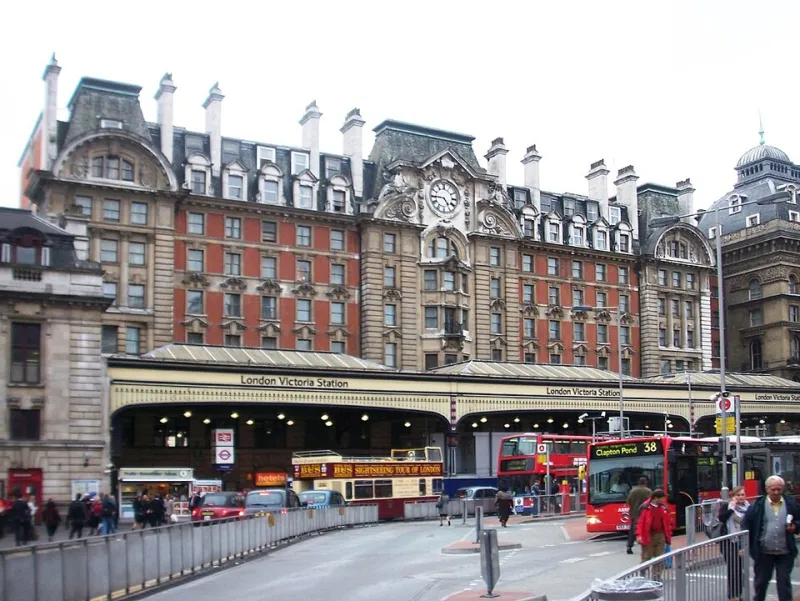
Photo: surprise truck, CC BY 2.0, via Wikimedia Commons
There is a moment in every big UK night out when the music stops being the main character. It is not the lights coming up, the bar shutting or even the bouncer’s final sweep. It is someone in the group chat typing: “What time’s the last train?” Suddenly the whole evening has a deadline. The dancefloor becomes a countdown clock. The next round depends on whether you are on the 23:47 or the 00:12, and whether that connection at Crewe is a rumour or a genuine possibility.
In 2026, the UK’s late-night map is still shaped by transport as much as by taste. You can book a ticket for a warehouse in a city you barely know, but the timetable has already read the small print. It decides whether you get two hours or five. It decides whether the final memory is a sunrise over the canal or a cold platform with a rail replacement bus and a half-eaten bag of chips.
The timetable is the bouncer nobody argues with
A club can have a flawless soundsystem, a sensible door policy and a cloakroom that does not swallow coats whole. None of that matters if the last sensible train home leaves before the headline set. This is the unglamorous force behind so many UK nights out: not the queue, not the drink prices, but the quiet knowledge that the station will not wait.
That is why so many big nights are built backwards. You pick the venue near the station, not the one you actually want to go to. You leave the club at 01:40 because the 02:09 is the only service that gets you back before morning. You skip the second room because the walk to the platform is twelve minutes and you have learned, the hard way, that twelve minutes is optimistic when you are wearing shoes designed for standing, not sprinting.
The timetable is also a social filter. It splits the group into the sensible ones, the ones who have booked a hotel, and the ones who are absolutely certain they can make the last train despite currently being four miles from the station and holding someone else’s jacket.
Where the last train writes the guest list
Some cities make late-night travel feel like part of the night out. London has the Night Tube and Night Overground on key lines, which changes the shape of a Friday or Saturday entirely. Manchester has a growing late-night transport conversation and a city centre that is compact enough to make a taxi split less painful. Liverpool, Leeds, Newcastle and Glasgow all have their own rhythms, their own late queues and their own unofficial rules about which side of the city you want to be stranded on.
Other places are less forgiving. A brilliant club can be twenty minutes from the station by day and an hour by night bus, and that difference matters when the group is tired and the chip shop is calling. Bristol’s hills, Edinburgh’s festival-time crowds, Cardiff’s post-match taxi scrum and Birmingham’s wide-city-centre spread all ask the same question: how much of your night are you willing to spend in transit?
This is not a reason to stay home. It is a reason to be honest about the geography. A big night out is not just the room you are in. It is the journey there, the journey back and the bit in between when someone says, “We could walk it,” and everyone knows that is a lie.
The night bus is not a rescue plan
The night bus is a beautiful thing and a terrible emergency plan. It is brilliant when you know the route, the stop and the rough timing. It is less brilliant when you are relying on it to save you at 03:00 with a phone battery at 4% and no idea whether the N-number goes east or west.
Night buses are also where the night out gets its second act. You meet the people who left the club early, the people who never went in and the people who are still debating whether the night is over. The atmosphere is somewhere between a moving living room and a group therapy session. It is not glamorous. It is deeply British.
The trick is to treat the night bus as a plan, not a gamble. Check the route before you go out. Save the stop names. Work out whether you need a contactless card, a ticket app or exact change. And if the route is complicated, decide now whether a split taxi is worth the extra tenner.
Taxi surge and the 3am tax
Every UK city has its own version of the 3am tax. The meter says one thing, the app says another, and the driver has somehow found a route that adds three minutes and four pounds. Surge pricing is the final boss of the big night out. It arrives exactly when you are least able to argue with it.
In 2026, the smart move is to decide your exit before the surge decides it for you. Book ahead if the app allows it. Walk five minutes away from the main club strip to a quieter pickup point. Split the fare properly rather than letting one person become the unofficial bank. And if the price is absurd, remember that a night bus, a night café or a genuinely good 24-hour bakery can be a better use of the next forty minutes than staring at a fare estimate in disbelief.
How to stretch the night without the stranded-at-the-station regrets
Start with the last train, not the first drink. Check the final services before you leave the house, including the connection. A direct train at 00:30 is a different animal from a train at 23:55 and a rail replacement bus at 01:20.
Pick a venue cluster over a single far-flung destination. A night that moves between three places within ten minutes of each other will always beat a night that hinges on one heroic cross-city trek at closing time.
Have a meeting point. Sounds boring. Saves friendships. If the group splits between the techno room, the indie room and the smoking area, agree on a spot and a time. The station is not a meeting point. The station is a stress test.
Keep your phone alive. A portable charger is not a fashion accessory. It is the difference between a smooth exit and a group of adults asking a kebab shop worker to call a taxi.
And finally, accept the Cinderella curfew. The last train is not the enemy of the big night out. It is the thing that gives it a shape. The best UK nights are not always the longest ones. They are the ones where nobody has to sprint for a platform, nobody loses the group and nobody spends the first hour of the next day explaining why they fell asleep on a bus that was going the wrong way. The timetable is not romantic. But a night that ends properly is.